
Why invest in Enlitic
We are building the trusted data foundation for the AI era of medical imaging. As AI reshapes healthcare, the value of clean, trusted, well governed data only goes up. Enlitic turns messy hospital imaging data into a reliable asset that hospitals, AI vendors and researchers can all depend on.
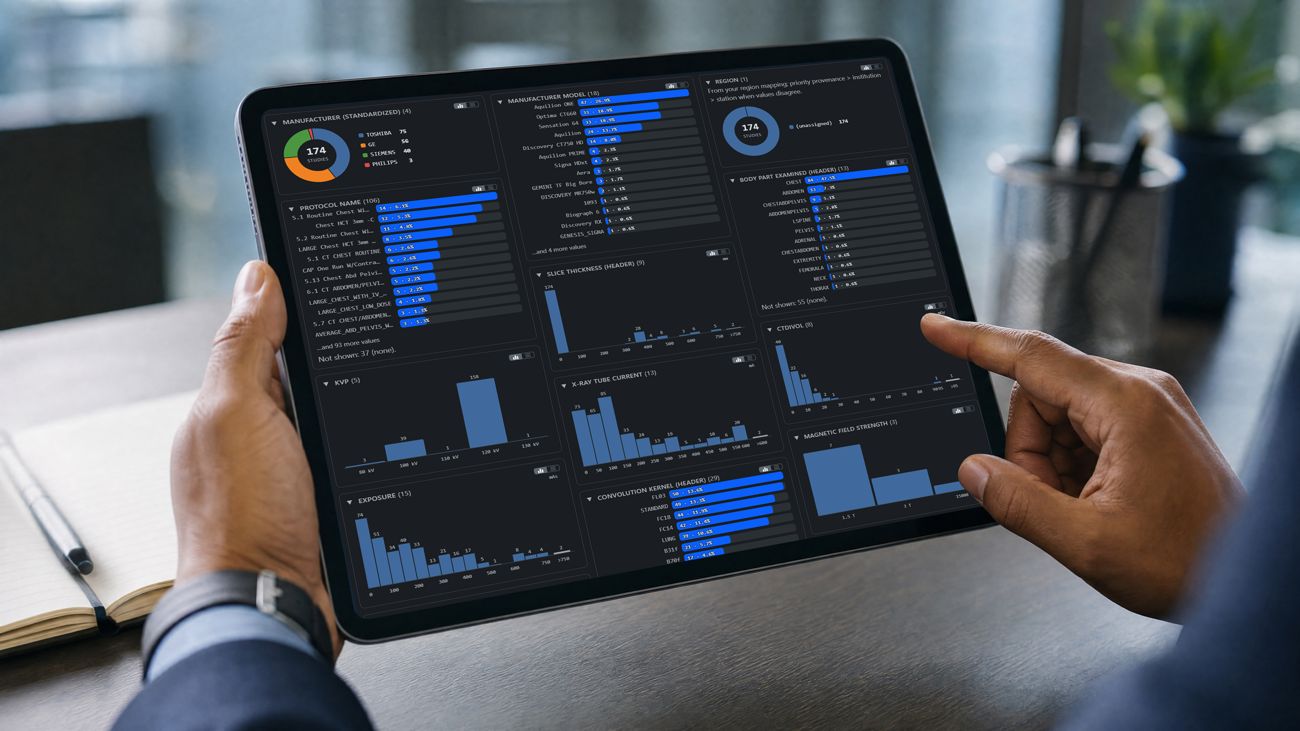


Welcome to EnliticEnlitic, Inc.
Broad by design,
deliberate by segment
Having a broad go-to-market (GTM) strategy provides several valuable benefits for Enlitic. Targeting multiple customer segments, and geographic regions simultaneously enables the Company to:
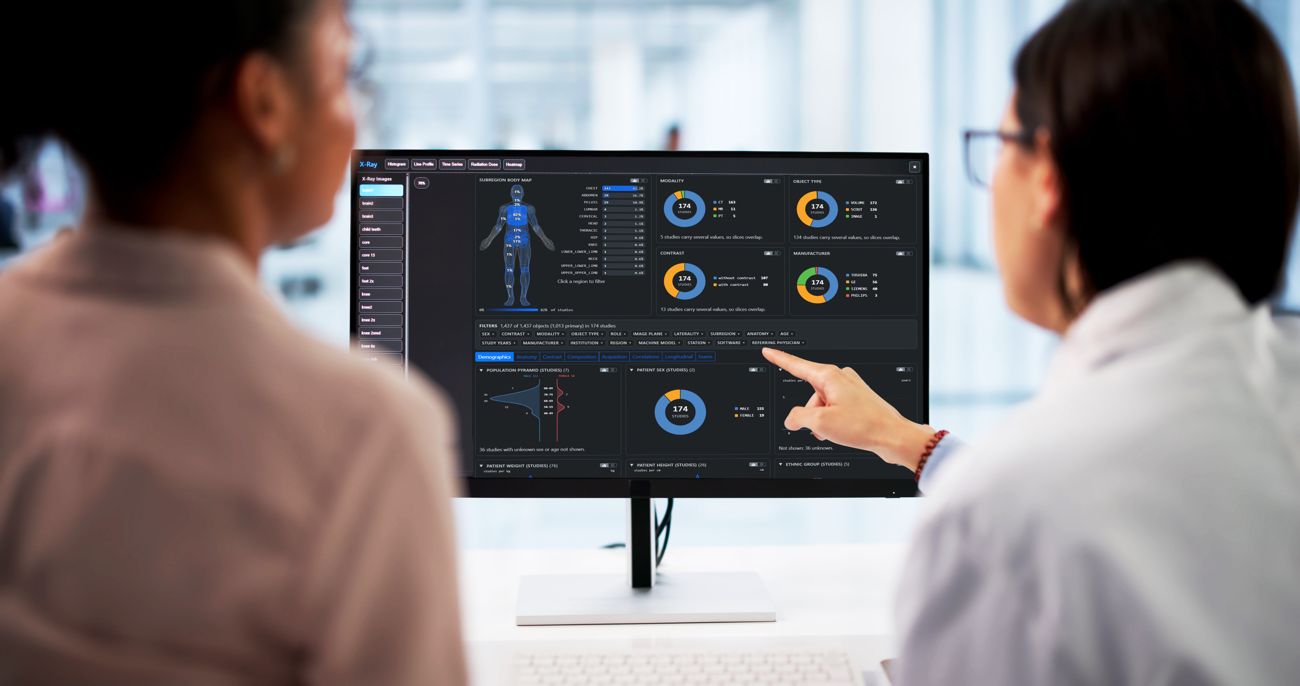
- 01Create cross-selling and up-selling opportunities as the Company establishes relationships with customers, it can offer complementary products or services, increasing overall sales and customer loyalty.
- 02Reduce the Company’s reliance on a single market by diversifying revenue streams and mitigate risks associated with changes in economic conditions.
- 03Reach a larger pool of potential customers, expanding its addressable market leading to increased sales opportunities and revenue potential.
- 04Gain competitive advantage over competitors who may focus on narrower markets and capitalize on numerous opportunities that competitors might miss.
- 05Enhance brand visibility and recognition by reaching a wider audience, and becoming more recognizable and trusted, contributing to overall brand equity.
- 06The broad GTM strategy facilitates entry into multiple regions and helps navigate diverse regulatory environments and cultural nuances.
The forces reshaping
medical imaging
Enlitic is leveraging artificial intelligence to improve the labeling of medical images and improve interoperability and data quality that has downstream impacts on the healthcare enterprise. Enlitic operates primarily in the Radiology Department of healthcare facilities, but its impact reaches into the enterprise. Most of the Company’s revenues come from healthcare providers and OEMs that are looking to improve their operations through workflow efficiency, increase in capacity, and better interoperability.
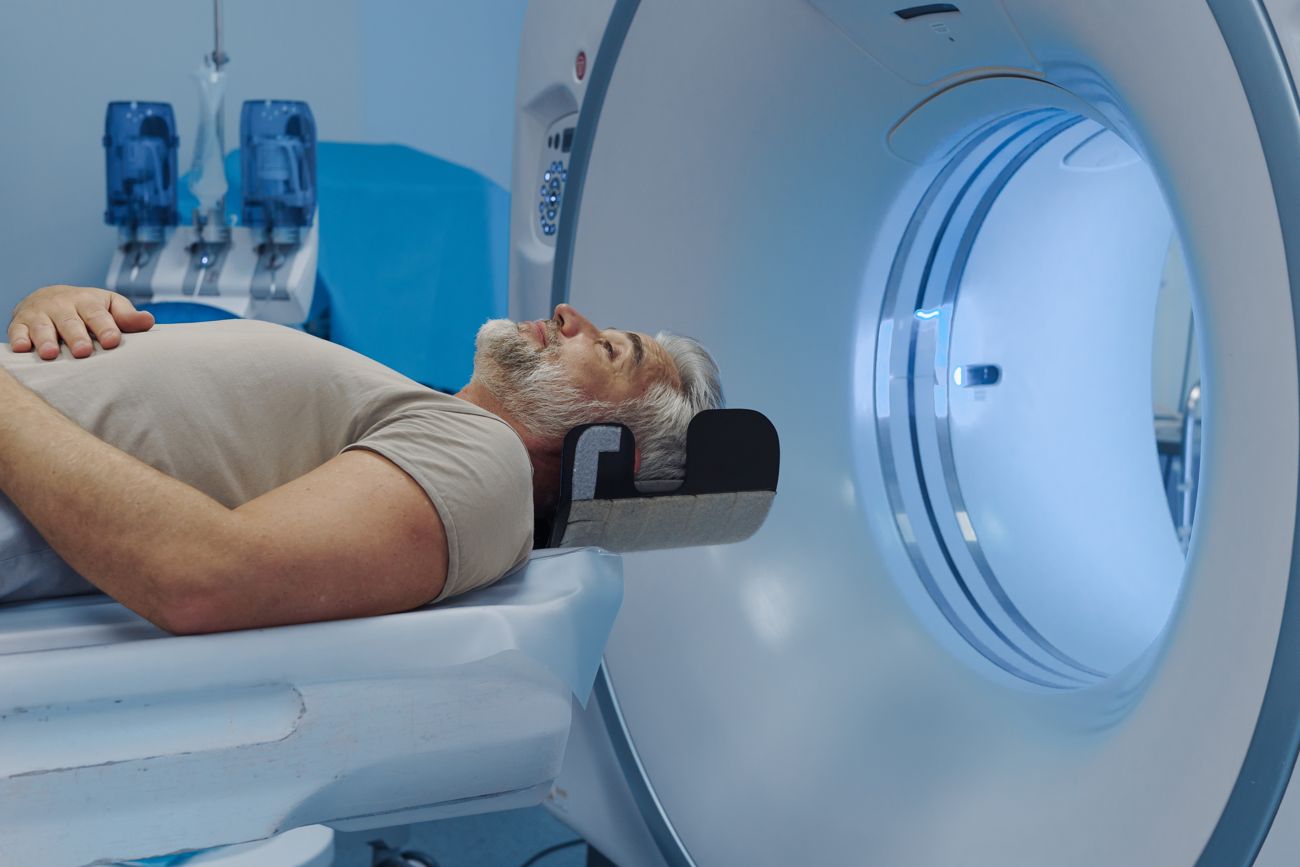
These trends are shaping the future of radiology, improving patient care, and driving advancements in medical imaging technologies. As the healthcare landscape continues to evolve, radiology will play a crucial role in leveraging innovative technologies to enhance diagnostic accuracy and patient outcomes.
There are several drivers that are influencing the field of radiology. These market drivers are impacting the need for adoption of data standardization methodologies.
Standardize, protect,
integrate, analyze
Enlitic focuses the power of artificial intelligence into data management applications, enabling effective administration, processing, and sharing of patient data throughout the healthcare enterprise. The Enlitic framework standardizes, protects, integrates, and analyzes medical imaging data to create the foundation of a real-world evidence platform that improves clinical workflows, increases efficiencies, and expands capacity.

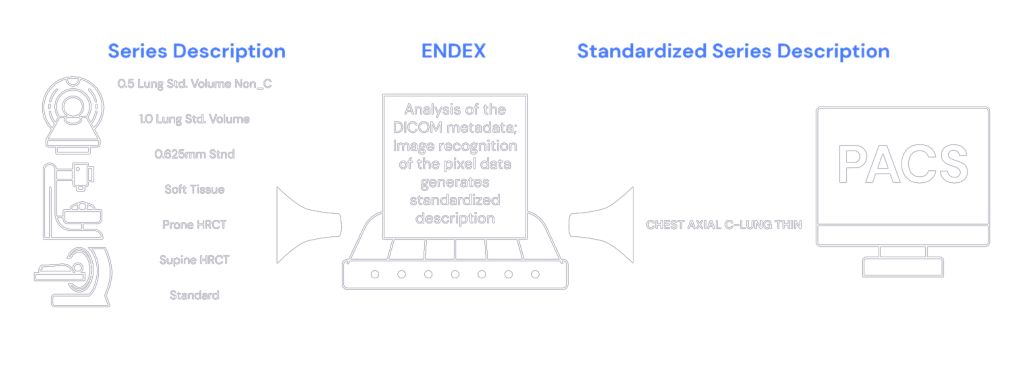
Enlitic leverages AI to improve how radiologists can interpret imaging studies faster and cope with growing demands, while enriching patient information to allow for higher-value data monetization. Improving data quality through data standardization and maintaining clinical relevance while deidentifying protected health information creates additional value for research and data monetization strategies.
Four routes into the imaging enterprise
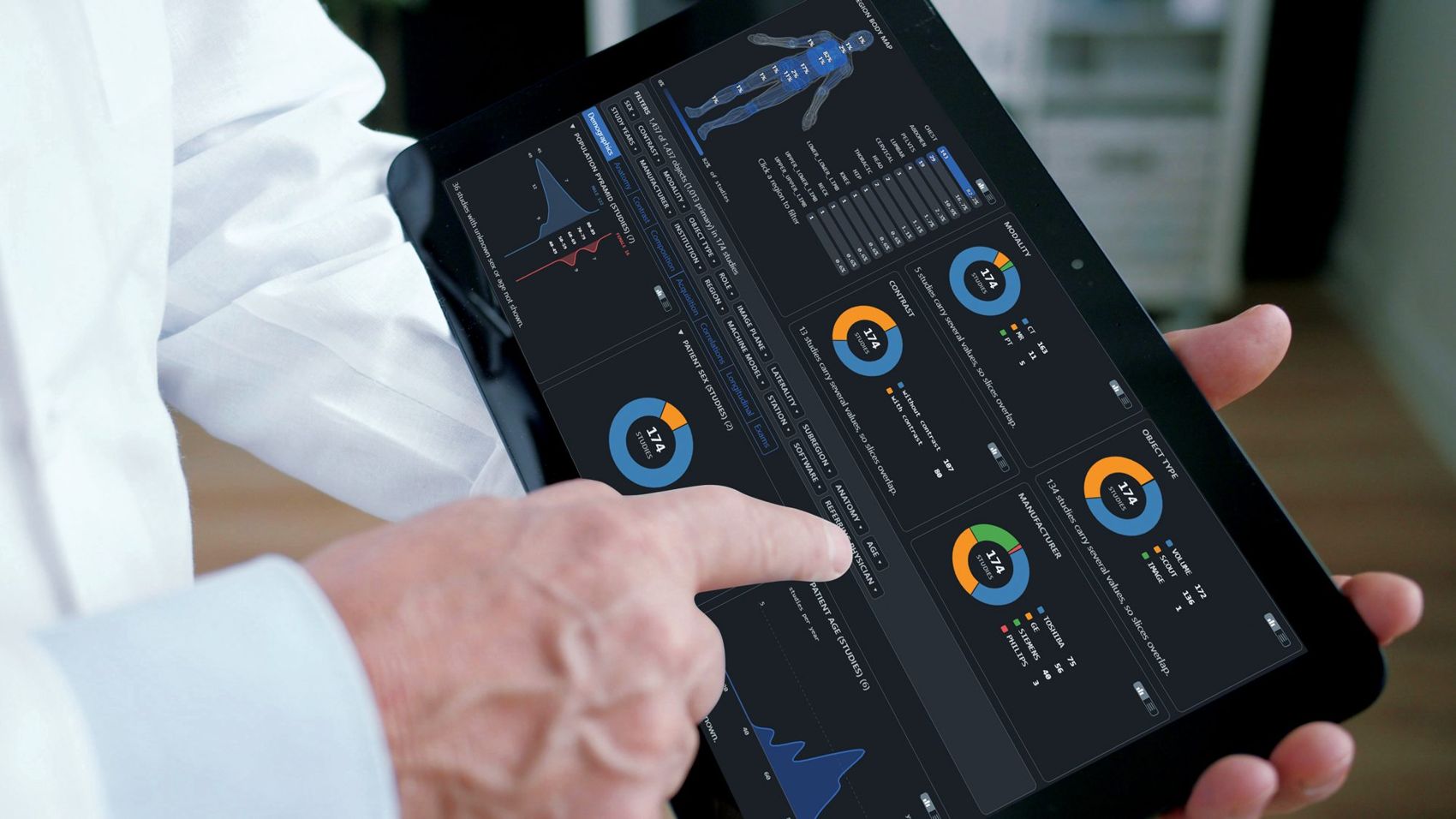
Healthcare provider segments represent different opportunities and vary in their scale, scope, and specialties, and understanding these distinctions helps in comprehending the diverse landscape of potential approaches to market. Enlitic’s technology is best positioned with larger facilities that generate large volumes of studies, with more than one facility generating radiology studies.
Healthcare institutions
and hospitals
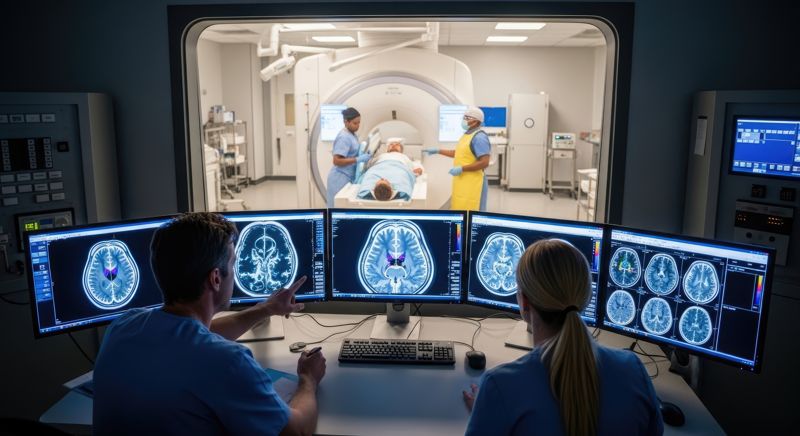
These large medical facilities are equipped with a wide range of services, including emergency care, surgery, intensive care units, diagnostic imaging, and various medical specialties. Typically teaching hospitals are affiliated with medical schools and involved in medical education and research and are key targets in the hospital market. These organizations leverage Enlitic’s AI‑powered data management solutions to enhance the accuracy and efficiency of medical imaging analysis, such as X-rays, CT scans, MRIs, and other diagnostic tests.
Radiology clinics
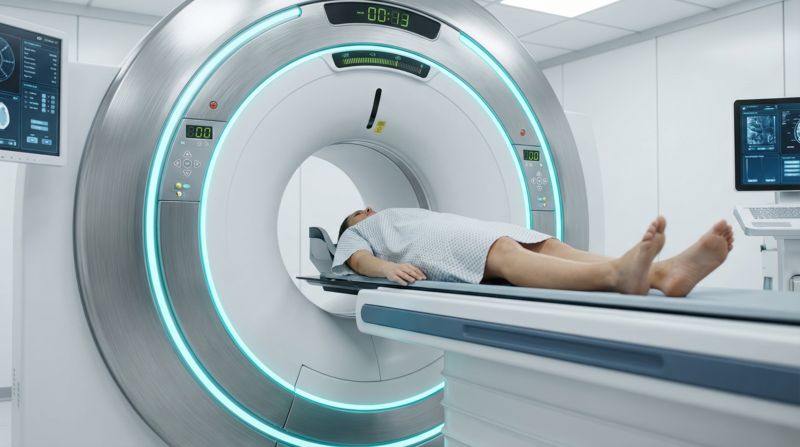
Independent diagnostic imaging centers, medical imaging clinics, or radiology labs are outpatient facilities that are smaller and more focused than hospitals, catering to specific services such as radiology. The twenty largest practices in the U.S. represent only 6% of all radiologists working in private clinics, so the market is very fragmented. By assisting radiologists in finding patients, displaying studies, and improving their efficiency, Enlitic’s AI helps streamline radiology workflows and improve diagnostic outcomes.

Healthcare technology
companies (OEM)
Enlitic collaborates with other healthcare technology companies to integrate its AI algorithms into their existing medical platforms or solutions, expanding the reach of its diagnostic capabilities. Picture Archiving and Communication System, AI platform vendors, and data management companies are included in this segment. This segment also represents a route to market indirectly while providing the OEM with competitive differentiation.

Telemedicine and
teleradiology providers
Teleradiology companies leverage Enlitic’s technology in facilitating remote diagnostics and improving healthcare delivery in underserved areas. These organizations suffer from the inconsistent naming conventions more than others due to the nature of their business in collaborating with multiple unrelated sites generating data.
A message from
the Chair

Dear Investor,
On behalf of the board of directors of Enlitic, Inc. I am pleased to offer you the opportunity to become a shareholder in Enlitic and join us in the next phase of our exciting journey.
Enlitic focuses the power of artificial intelligence into data management applications, enabling effective administration, processing, and sharing of patient data throughout the healthcare enterprise. By unlocking healthcare data’s value through a real-world evidence medical imaging database and developing a universal data model, we empower evidence-based decision-making, enhance research, and transform healthcare delivery.
Healthcare is a major contributor to the world’s data volume, accounting for 30% of it, and it is growing rapidly at a CAGR of 36%, outpacing even the media and entertainment industries. Despite this data abundance, healthcare is not making the most of its potential to enhance clinical and operational outcomes. The main challenge lies in data quality. As the industry increasingly relies on data-driven decisions and value-based care, there is insufficient attention given to enhancing data quality to make it usable and actionable. Data standardization provides a solution by establishing a universal data model that enables seamless data exchange and allows for the practical implementation of data insights.
Enterprise approach
Enlitic adopts an AI‑driven data management approach to establish standardized study and series descriptions, significantly influencing how medical images are utilized across the enterprise. This standardization impacts various aspects, from optimizing radiologists’ workflow and enhancing researchers’ data utilization to streamlining workflow orchestration and implementing data monetization strategies. By ensuring the uniformity of medical image data, data quality is improved, leading to better decision-making and analysis.
Moreover, Enlitic employs AI to effectively deidentify patient studies, safeguarding patient privacy while preserving crucial clinical information. This deidentification process enhances the data by removing sensitive details, making it even more valuable for enterprise-wide strategies and fostering data-driven insights without compromising patient confidentiality.
Enlitic is also actively developing solutions that utilize computer vision and natural language processing to identify discrepancies in coding and billing, capturing potential lost revenues. We are also connecting facilities together to contribute to real-world evidence platforms, incorporating medical images in our upcoming products, ENCODE and ENSIGHT.
Our unique position in the market provides us with a competitive advantage in tackling data quality challenges at an enterprise level. By standardizing medical images at their source, the positive benefits cascade downstream to other departments and staff. Unlike many industry competitors who focus on a singular use for standardized data, our approach provides tangible benefits to multiple stakeholders, ensuring a higher return on investment and maximizing the value of our solutions.
Commercialization
Enlitic commercialized the first of its products in 2022 and the second in 2023 and has begun generating revenues from a healthy pipeline of opportunities. Several customer agreements in place are moving through the Proof-of-Concept phase with expectations that End User License Agreements will come in the latter stages of 2023. With an average Annual Recurring Revenue per customer averaging $335,000 USD and a subscription-based business model, the Company believes they can deliver annuity revenue and profitable margins.
Experienced team
Enlitic’s management team has over 250 years’ experience in the healthcare and radiology space, ranging from technology start-ups to major solution providers. The Company’s board has decades of experience in private and ASX-listed companies, and in creating shareholder wealth.
The Company was recognized as one of the 50 Smartest Companies in 2016 by MIT Technology Review and won the €1M prize for its deep learning technology at the CUBE Tech Fair in 2017. This technology has served as the foundation for over sixty patents and the development of the Company’s product portfolio.
We look forward to welcoming you as a Shareholder.
Yours sincerely,